Introduction
The Marine Ecology and Biotechnology Laboratory (MEB Lab.) at Hanyang University pursues two research goals:
- Generate knowledge for predicting future marine ecosystems and supporting sustainable ecosystem conservation by understanding their structure and function.
- Improve human well-being by developing useful compounds and enabling technologies based on marine plankton.
Research Areas
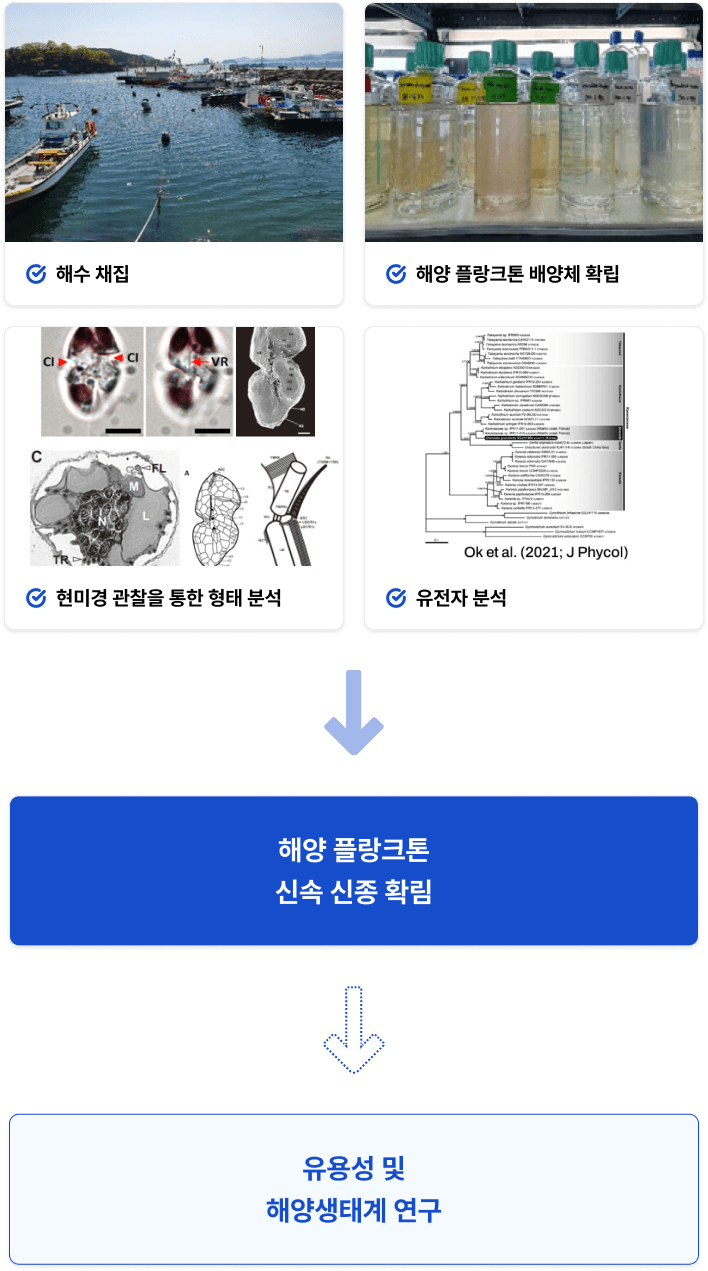
Discovery of New Marine Plankton Species
Why It Matters
- Under the Nagoya Protocol, biological resources are recognized as national assets. Discovering new marine species and studying their applications helps secure these biological resources.
- Many marine plankton species remain unidentified. Formally describing these species establishes a foundation for research on marine ecosystem structure and function.
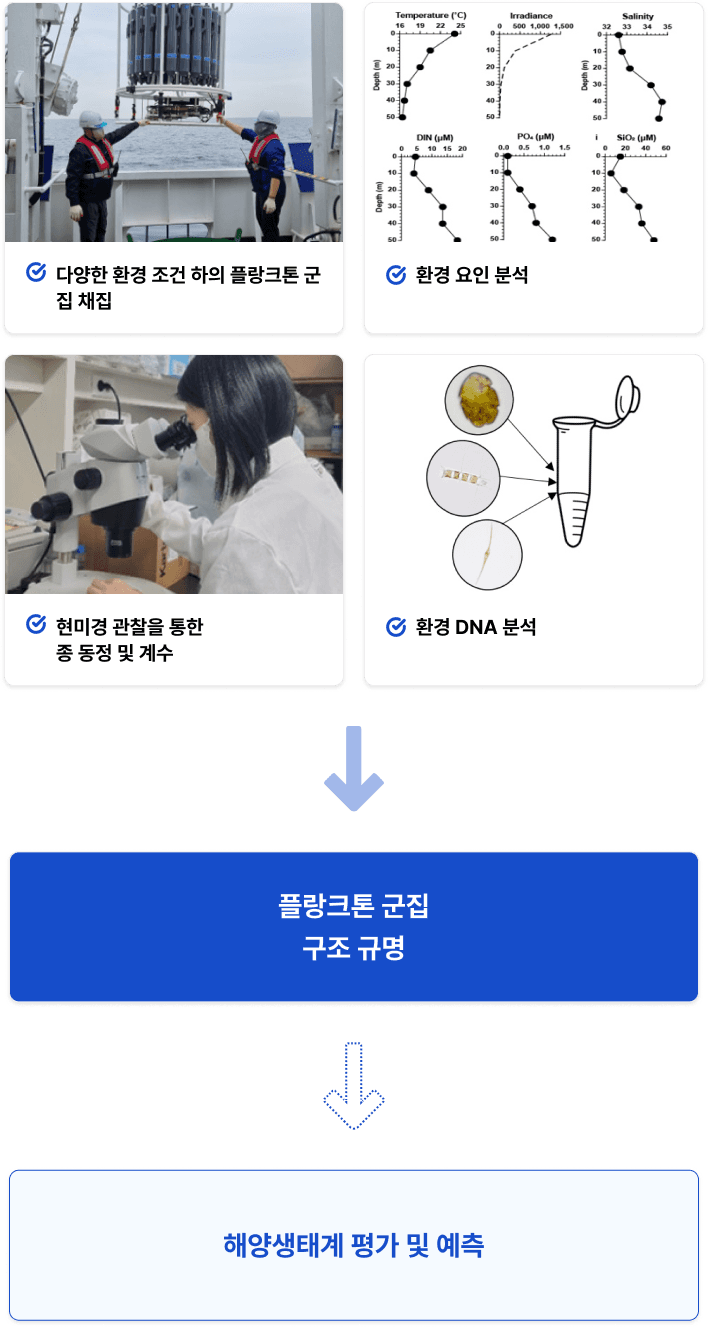
Characterizing Plankton Community Structure in Marine Ecosystems
Why It Matters
- Marine plankton respond sensitively to environmental change. Studying their community structure under different environmental conditions enables assessment of marine ecosystems.
- Understanding plankton community structure under a range of environmental conditions is a prerequisite for predicting marine ecosystem structure and function under future conditions.
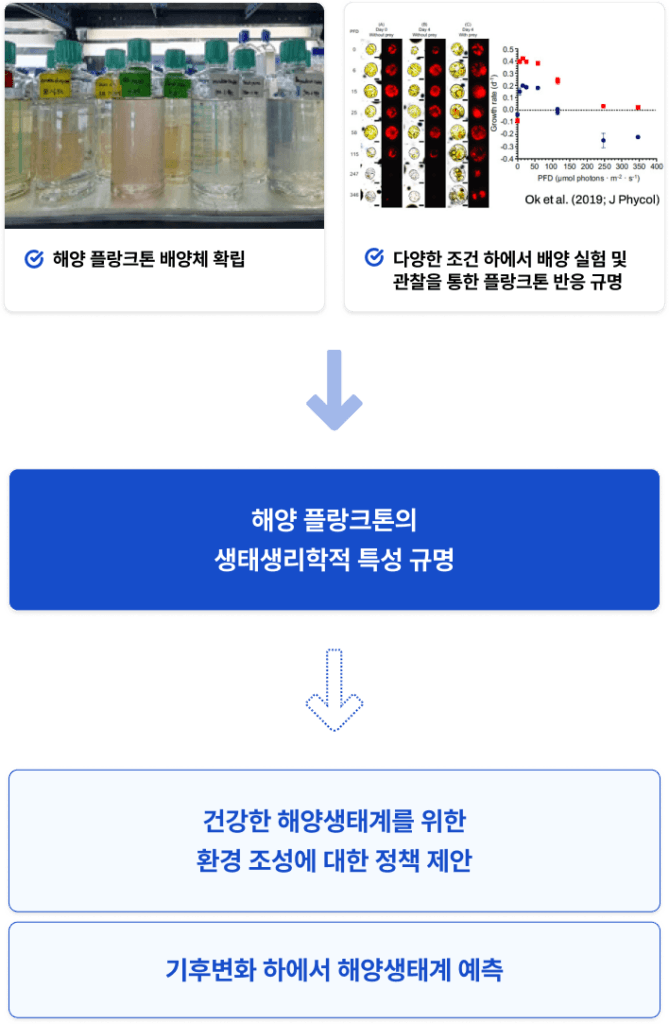
Understanding the Ecophysiology of Marine Plankton under Different Environmental Conditions
Why It Matters
- Marine plankton are primary producers and the foundation of marine food webs, with major implications for marine resources and fisheries.
- Understanding plankton responses to different environmental conditions can inform policies for healthy marine ecosystems and improve predictions of ecosystem responses to climate change.
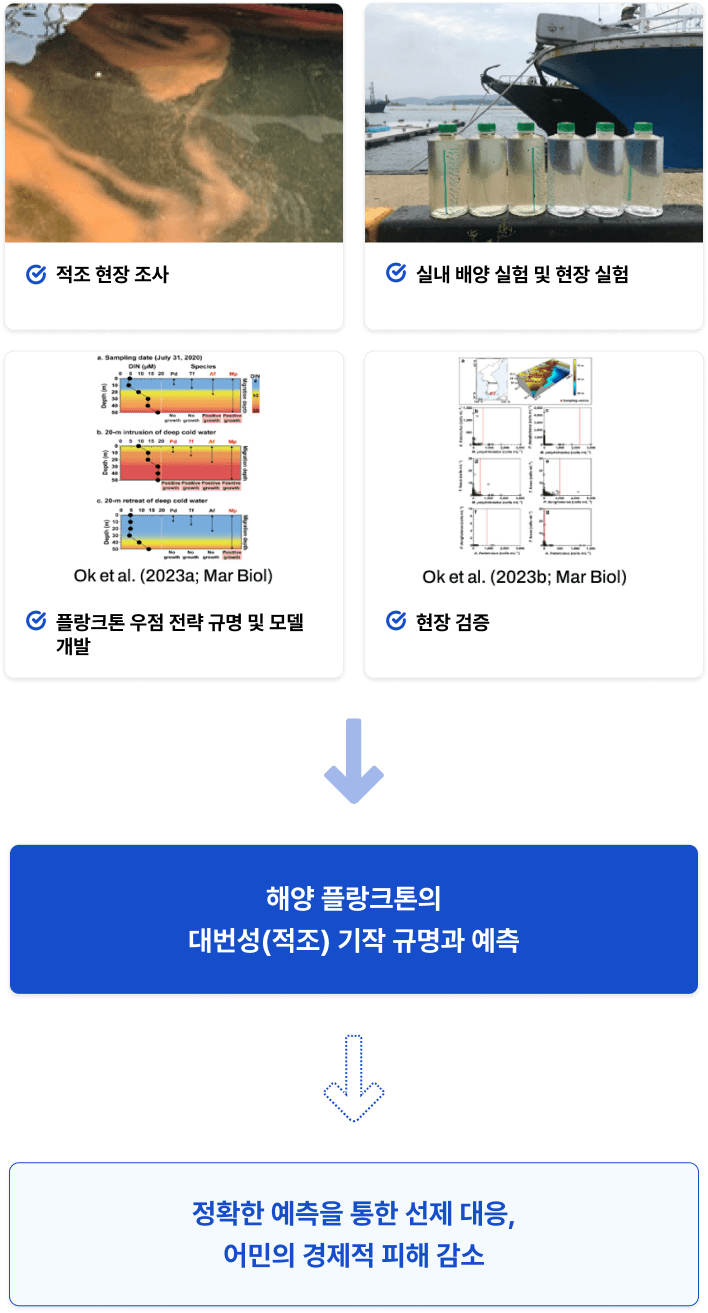
Understanding and Predicting Marine Plankton Blooms and Red Tides
Why It Matters
- Marine plankton blooms, including red tides, can cause mass mortality of marine organisms, harm human health, and inflict substantial economic losses on fisheries and tourism. Developing systems that accurately predict blooms and support timely preventive action is therefore essential.
Developing Large-Scale Plankton Culture Techniques and Methods to Enhance Valuable Compounds
Why It Matters
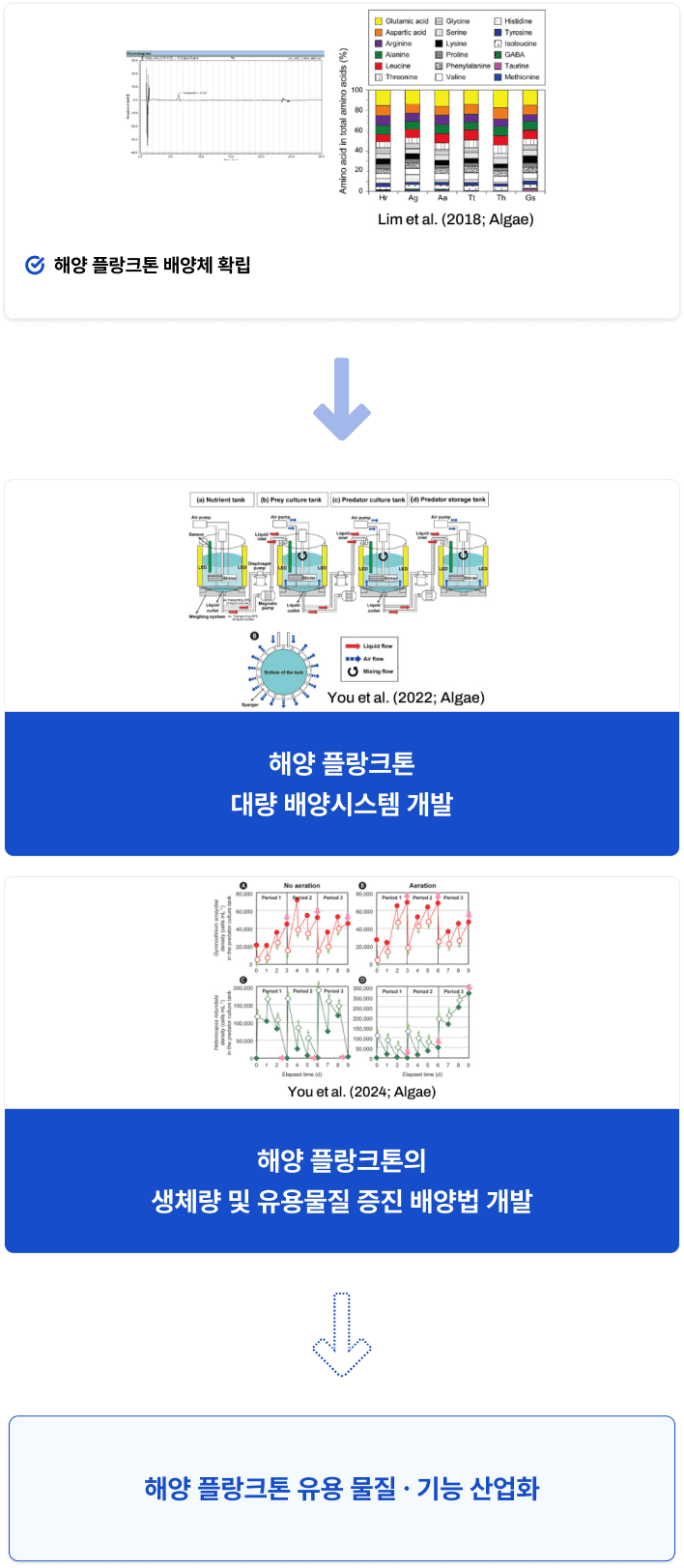
- Marine plankton are attracting growing interest for industrial applications, with the potential to produce valuable compounds for uses ranging from bioenergy to pharmaceuticals.
- Commercializing plankton-derived compounds requires efficient large-scale culture techniques and cultivation methods that increase the production of useful substances.