
About the Department
The Department of Marine Science and Convergence Engineering advances our understanding and use of the ocean through cutting-edge technology.
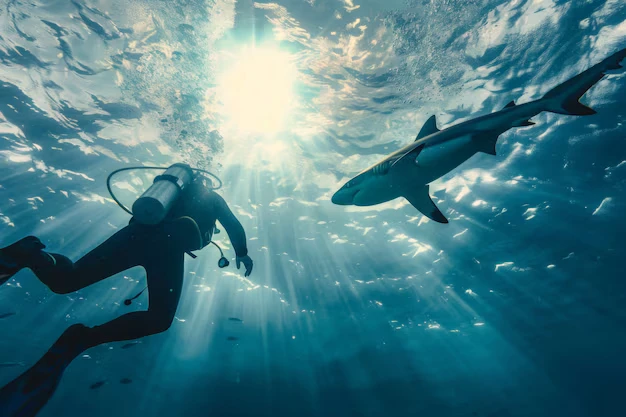
Climate change and marine pollution are intensifying concerns about the global environment. Korea also faces the need to strengthen maritime defense for national security and to secure and manage marine energy resources for sustainable growth. To address these global and national challenges, the Department of Marine Science and Convergence Engineering prepares professionals through interdisciplinary education and research that combine fundamental marine science with advanced applied technologies. Our four areas are: (1) marine assessment and exploration engineering; (2) marine ecology and marine and fisheries biotechnology; (3) the marine environment and climate change; and (4) technologies for utilizing marine resources and energy.
Founded as the Department of Earth and Marine Sciences in 1984, the department has developed over the past four decades in response to changing societal needs and advances in marine science and technology.
The department has demonstrated its excellence in ERICA’s competitiveness evaluations of science and engineering departments, ranking first at the undergraduate level four times and at the graduate level for five consecutive years. Since 2020, it has supported students and advanced research through the BK21 program, with approximately KRW 5 billion in funding over seven years.
Our graduates work as marine science professionals across a wide range of fields, contributing to society and strengthening the department’s reputation.
The Department of Marine Science and Convergence Engineering is committed to educating professionals who will lead innovation in marine science and technology.
Preparing professionals to lead the next era of marine innovation Creative Professionals Developing Talent
Faculty and Educational Approach
Faculty with Outstanding Research Expertise
-
Marine Ecosystems
-
Develop the ability to assess, predict and address changes in marine ecosystems caused by climate and environmental change.
- Professor Jung-Ho Hyun
- Professor Jin Hee Ok
-
Marine Environment
-
Develop skills in climate and marine environmental assessment, pollutant tracing, carbon cycling and organic biogeochemistry.
- Professor Kyung-Hoon Shin
- Professor Hyo-Bang Moon
-
Marine Engineering, Exploration and Disaster Prevention
-
Develop expertise in marine engineering, critical thinking and creativity.
- Professor Sungwon Shin
- Professor Ji-Woong Choi (JA)
- Professor Ahn, Seong-Ho
-
Climate Assessment and Modeling
-
Develop programming skills, the ability to analyze climate and weather data accurately, and a strong understanding of fundamental dynamics.
- Professor Kim, Young-Ho
- Professor Hyo-Seok Park
Students learn from distinguished faculty in four areas: marine ecosystems; the marine environment; marine engineering, exploration and disaster prevention; and climate assessment and modeling. Our education combines fundamental theory with advanced research, drawing on the expertise of faculty recognized in Korea and internationally. Specialized coursework builds a strong theoretical foundation, while practical training with advanced equipment provides opportunities to gain field experience.
IC-PBL
-
IC-PBL stands for Industry-Coupled Problem-Based Learning. This educational model connects industry, society and universities to help students solve real-world problems.

- Identify industry settings relevant to the course.
- Develop IC-PBL scenarios using real problems provided by industry partners.

- Provide students with industry materials relevant to the problem.
- Have industry representatives review students’ interim reports.

- Provide feedback on and evaluate students’ final reports.
- Adopt and apply student ideas that are useful in industry.
The Department of Marine Science and Convergence Engineering uses IC-PBL, a practice-oriented educational model first introduced at Hanyang University ERICA. Through active student participation and collaboration with government agencies and industry, the model provides practical learning experiences that develop problem-solving skills, creativity and interdisciplinary thinking.
Achievements in Marine Science and Convergence Engineering
Department Highlights
-
The department operates affiliated research institutes staffed by outstanding researchers.
-
Selected independently as a department for the National Research Foundation of Korea’s BK21 program.
-
Annual funding of KRW 730 million secured through August 2027.
-
Ranked first overall among Hanyang University ERICA undergraduate departments four times since 2017.
-
Ranked first overall in Hanyang University ERICA graduate department evaluations for five consecutive years (2019–2023).
-
Graduates work in public service, government research institutes, academia, and the defense, marine environment and medical industries.
-
Many graduates have passed the Grade 5 Technical Civil Service Examination in the marine and fisheries field.
Graduate Education and Research Training Program
BK21 PLUS
-
Educational Vision
- Vision: Develop world-class interdisciplinary professionals who lead the fields of earth and marine sciences.
- Educational Goals
- Train specialists to assess and predict the drivers of climate change.
- Develop interdisciplinary professionals who can address marine ecological and environmental challenges.
- Train specialists to manage hazardous substances entering the ocean.
- Train experts in marine observation technologies.
-
Research Vision
- Vision: Become one of the world’s top 20 research teams in marine convergence science and technology.
- Research Strategies
- Build research infrastructure specializing in climate change and marine ecological and environmental change.
- Strengthen international competitiveness by expanding global research networks.
- Lead advanced interdisciplinary research in marine science and technology.
BK21 is a graduate education and research training program that supports master’s and doctoral students and early-career researchers, including postdoctoral researchers and contract faculty, to develop world-class graduate schools and outstanding research talent. The Department of Marine Science and Convergence Engineering has independently secured BK21 support from the National Research Foundation of Korea since 2013, demonstrating the competitiveness of its graduate research. The program provides sustained support for graduate education and research, with annual funding of KRW 730 million secured through August 2027.